Why does my face sting even when using plain water or basic moisturisers?
When your stratum corneum is cracked or stripped of lipids, microscopic cutaneous nerve endings (TRPV1 receptors) are exposed near the surface. Water and basic cosmetic fluids physically shock these bare nerves. The stinging stops only when topical Ceramides restore a physical ceiling over the tissue.
How do Ceramides, Hyaluronic Acid, and Trehalose fix deep-tissue dehydration?
This trio acts as a moisture trap. Hyaluronic Acid and Trehalose function as deep water-binding humectants that plump cells with hydration. Plant-derived Ceramides act as the mortar, gluing surface cells together to arrest Transepidermal Water Loss (TEWL) and lock that hydration inside.
Is Retinal (Vitamin A) truly safe to use on a highly sensitive skin profile?
Yes, when formulated like Nourish London's Retinal Resilience Serum, which shields Retinaldehyde inside a base of protective Ceramides. Unlike standard retinol, which causes intense burning and peeling, retinal requires only one conversion step by the skin, allowing it to accelerate cellular repair up to 11 times faster with minimal irritation.
Why are Shea Butter, Borage Oil, and Lavender ideal for calming active redness?
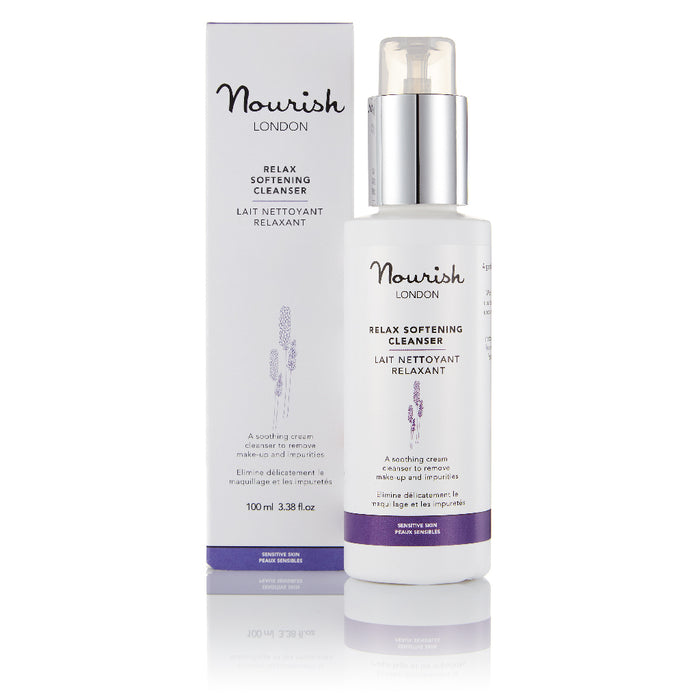
Organic Borage Oil is rich in Gamma-Linolenic Acid (GLA), an essential lipid that shuts down inflammatory pathways. Raw Shea Butter softens rough patches, while therapeutic Lavender Essential Oil acts as a natural vasoconstrictor, physically cooling the skin and reducing capillary flushing.
Why must a sensitive skin routine finish with Non-Nano Zinc Oxide daily?
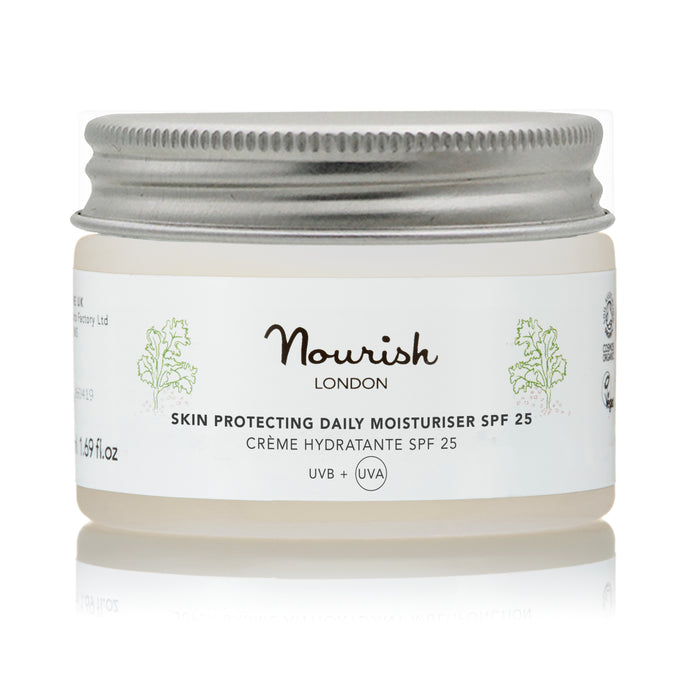
UV rays degrade cellular DNA and trigger internal inflammation, which instantly flares sensitive skin. Non-nano Zinc Oxide is a physical mineral sun filter. It sits safely on top of the skin to reflect and scatter radiation away from your face, whereas chemical filters absorb UV rays and convert them into irritating heat inside the tissue.