Benefits
Smooths hair and reduces frizz
Enhances hair hydration and fibre smoothness
Provides antioxidant protection
Forms a lightweight conditioning film
Best For
Dehydrated skin
Environmentally stressed skin
Skin during hormonal transitions
Setting and refreshing makeup
What Is Pea Peptide?
Pisum Sativum (pea) Peptide is produced through a proprietary fermentation process using Lactobacillus bulgaricus. The resulting peptide has a controlled molecular weight of approximately 750 Da, optimised for enhanced solubility and performance in formulation.
Pea peptide is derived from green peas through fermentation, yielding a plant-derived peptide rich in amino acids that support the skin's surface condition. It is used on both hair and skin for conditioning and antioxidant protection.
How It Works
Pea peptide is used in skincare and haircare to help hydrate, soothe, and provide antioxidant defence against environmental stressors such as pollution. Its amino acid-rich structure allows it to form a light, conditioning film on the surface of both skin and hair.
Why Formulation Matters
As Dr Pauline Hili, Nourish London's founder and formulator, explains: "Pea peptide should be formulated to a pH between 4 and 7 and added during the cool-down phase of production. Like all peptides, its structure is vulnerable to hydrolysis outside this pH range, and sustained heat can denature the molecule before it ever reaches the skin. Getting this step right in the lab is what protects the peptide's integrity, and the finished product's performance, through to the point of use."
Scientific Notes
Research into pea protein hydrolysates has demonstrated antioxidant and metal-chelating properties, supporting the rationale for using pea-derived peptides in formulations designed to help protect the skin against oxidative stress (Irankunda et al., 2025).
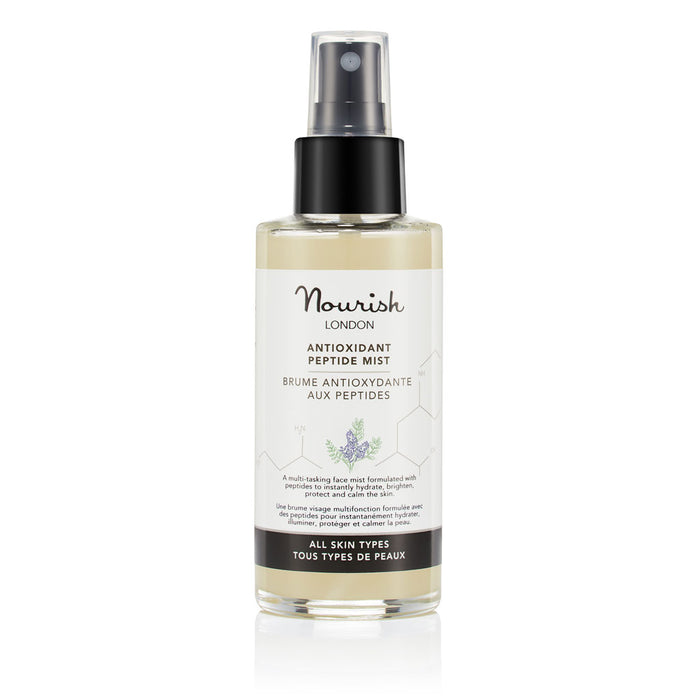
Products With Pea Peptide