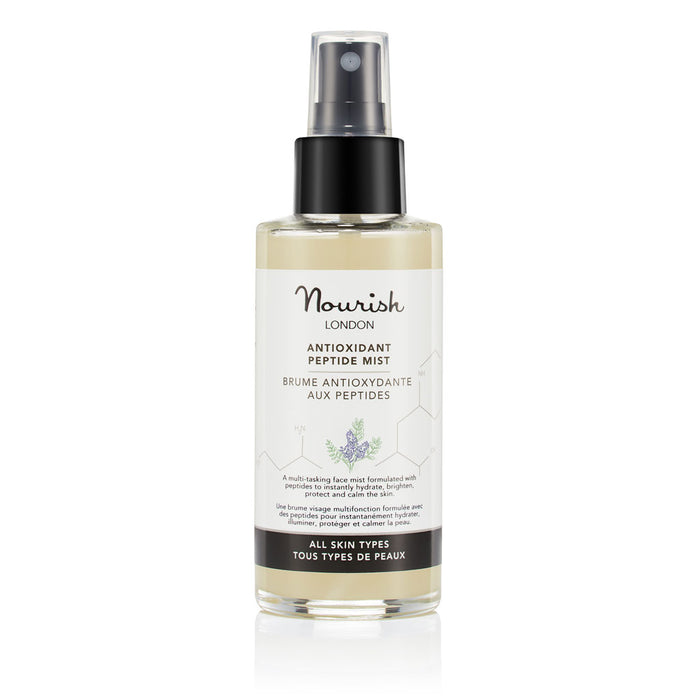
Benefits
Helps brighten the skin
Protects against free radicals
Helps improve the appearance of hyperpigmentation
Calms redness and irritation
Best For
Uneven skin tone
Dry skin
Problematic skin
What Is Liquorice?
Liquorice is an extract from Glycyrrhiza glabra.
How It Works
Liquorice's phytoactive components work in a number of ways. The isoflavone glabridin blocks tyrosinase activity, resulting in a reduction in melanin production, targeting overactive pigment cells without affecting normal cells. Liquiritin has similarly been shown to help break down and disperse melanin deposits in the upper layers of the skin.
Glycyrrhizinic acid and licochalcone suppress inflammatory pathways and help calm the skin, while flavonoids act as antioxidants and help protect the skin from oxidative stress. Licochalcone A in particular has been shown to inhibit pro-inflammatory responses, while glycyrrhizinic acid has similarly been shown to down-regulate inflammatory signalling pathways in skin, making liquorice effective for soothing redness associated with sensitised and reactive skin.
Liquorice's flavonoids, including licochalcone A, have also been shown to boost the skin's own antioxidant defences and reduce free radical generation following UV exposure, with topical glabridin shown to inhibit UVB-induced pigmentation and erythema in skin studies.
Why Formulation Matters
Liquorice extracts based in a water-soluble solvent such as glycerine should be added to the water phase. Care should be taken to add the extract during the cool-down phase, ideally below 40°C. Its preferred pH is between 4 and 6.5.
Scientific Notes
Foundational research by Yokota et al. (1998) established that glabridin, the main active isoflavone in liquorice, inhibits tyrosinase activity in melanocytes without detectable effects on normal cell DNA synthesis, and that topical glabridin can inhibit UVB-induced pigmentation and erythema.
A clinical trial by Amer and Metwalli (2000) found that topical liquiritin cream improved the appearance of melasma over a 4-week period. Research into licochalcone A has demonstrated anti-inflammatory efficacy correlating with clinical potency (Kolbe et al., 2006), and its ability to activate the skin's Nrf2 antioxidant pathway (Kühnl et al., 2015), while glycyrrhizic acid has been shown to down-regulate inflammatory signalling via the MAPK and PI3K/Akt pathways (Liu et al., 2018).
Recent studies have also demonstrated liquorice's antimicrobial potential in topical gels and its potential role in wound healing (Assar et al., 2021).