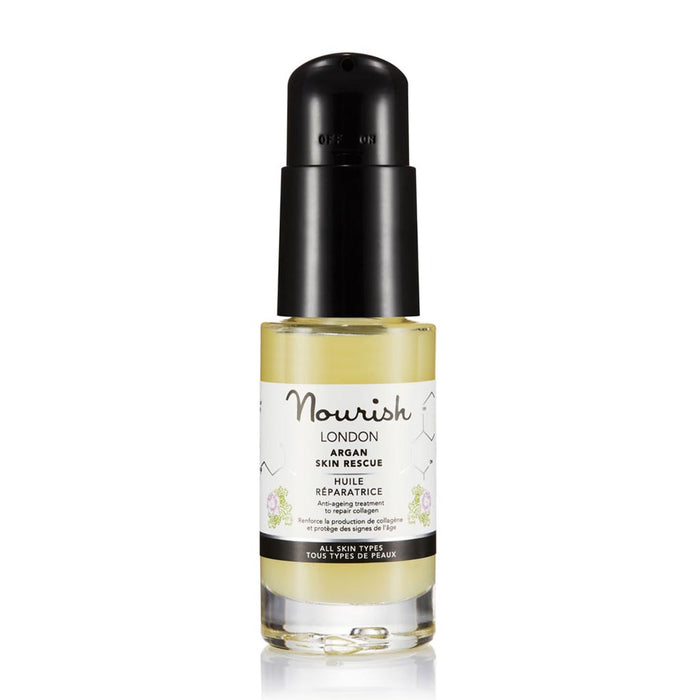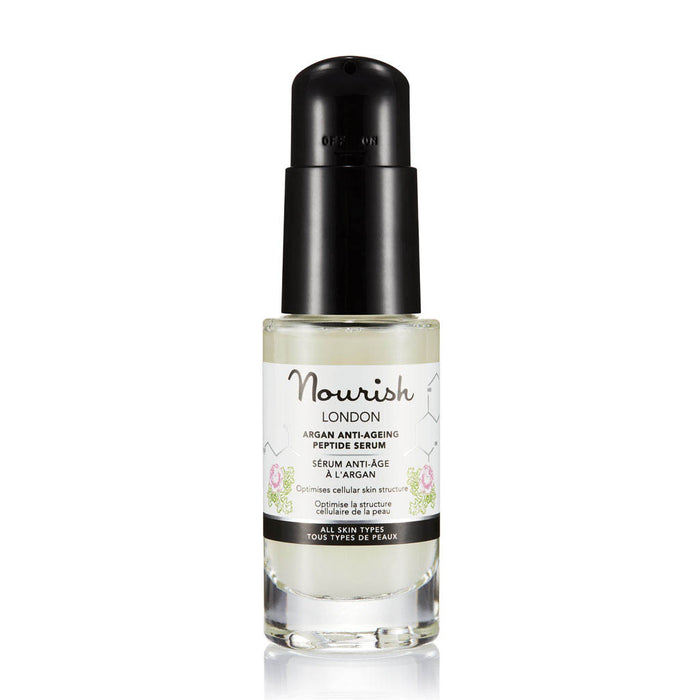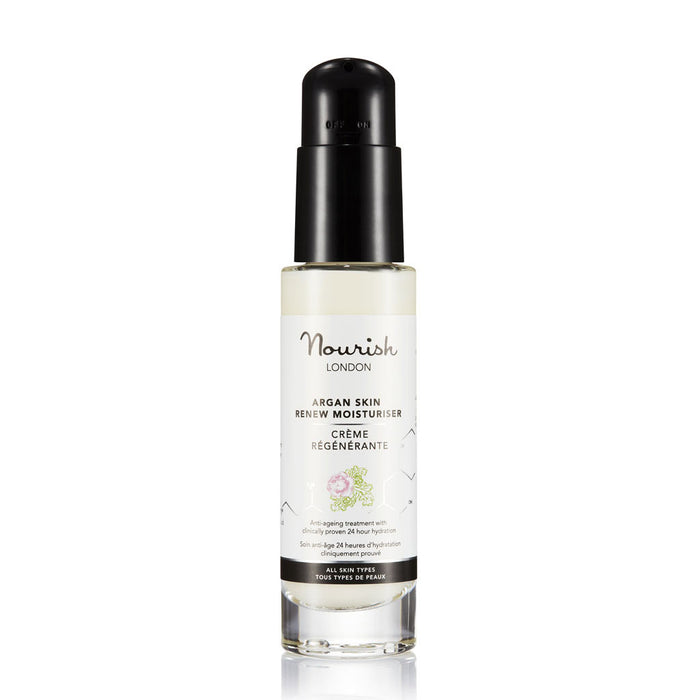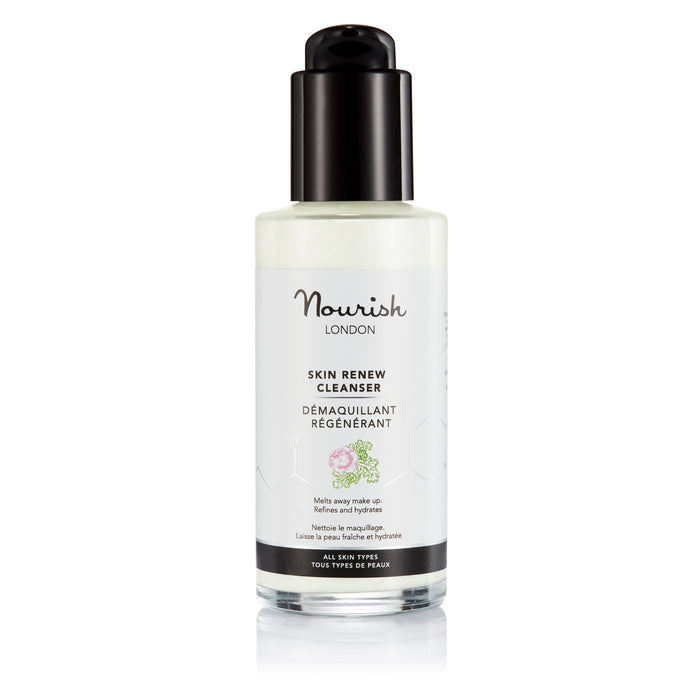
Active Ingredients

Argan Oil: Restore, Repair, and Reinforce Your Skin Barrier

"One of our favourite oils. A deeply nourishing organic oil rich in essential fatty acids and Vitamin E that helps to intensely hydrate, improve elasticity, and protect the skin."

Dr Pauline Hili, Founder & Formulator, Nourish London

Benefits

Reinforces the skin's moisture barrier Supports antioxidant defences Improves skin elasticity with use Soothes dry or irritated skin Suited to daily use

Best For

Dry and dehydrated skin Mature or ageing skin Sensitive skin Skin needing barrier support

What Is Argan Oil?

Prized for centuries in North Africa as both a food and a skin remedy, argan oil has earned a permanent place in modern skincare. Pressed from the kernels of the Argania spinosa tree, it delivers a dense mix of fatty acids, plant sterols, tocopherols and phenolic compounds.

Argan oil is extracted from the kernels found inside the fruit of Argania spinosa, a slow-growing tree native to the arid and semi-arid regions of southwestern Morocco and Algeria. It has long been used locally as a food oil, a skin and hair remedy, and a component of traditional medicine, and is now a staple ingredient in cosmetic formulation worldwide.

How It Works

Argan oil's benefits come from several bioactive components acting together, rather than any single compound.

The oil is dominated by unsaturated fatty acids, chiefly oleic acid and linoleic acid, which help reinforce the skin's lipid barrier and support moisture retention. It also carries a meaningful load of plant sterols, compounds associated with calming and barrier-supportive effects on skin.

Argan oil is notably richer in natural tocopherols than many other plant oils, giving it a strong built-in antioxidant defence, and its phenolic and flavonoid compounds contribute additional free-radical scavenging capacity. Together, this combination is understood to support the skin's barrier function and its natural resilience to everyday stress.

Why Formulation Matters

Argan oil's composition is not fixed. It varies meaningfully depending on where and how it's grown and processed, with studies comparing argan oil from different growing regions showing real differences in fatty acid ratios, tocopherol content and oil yield, driven by factors like altitude, climate and genetics.

How the oil is pressed and processed also affects both yield and the retention of its more fragile antioxidant compounds. Because much of argan oil's value lies in compounds like tocopherols and phenolics, protecting the oil from oxidation during processing and storage is essential to preserving its activity by the time it reaches the skin.

Sourcing consistently high-quality oil, and handling it carefully through formulation, is what determines whether argan oil delivers on its reputation or arrives at the skin as a diminished version of itself.

Scientific Notes

Human clinical research on argan oil has focused on its effect on the skin barrier and elasticity. In a study of postmenopausal women, daily topical application of argan oil over 60 days led to statistically significant reductions in transepidermal water loss and significant increases in epidermal water content, indicating improved barrier function and moisture retention. The same research group also recorded significant improvements in skin elasticity, including gross, net and biological elasticity, with topical and oral argan oil use, an effect not seen with an olive oil comparator over the same period (Boucetta et al., 2015).

Separately, more recent laboratory research examining argan oil's chemical composition has confirmed its high content of oleic and linoleic acids alongside phytosterols and phenolic compounds such as quinic acid and hesperidin, reinforcing the antioxidant and barrier-supportive profile described above (Boukeloua et al., 2025).

Products With Argan Oil

Related Skin Concerns